

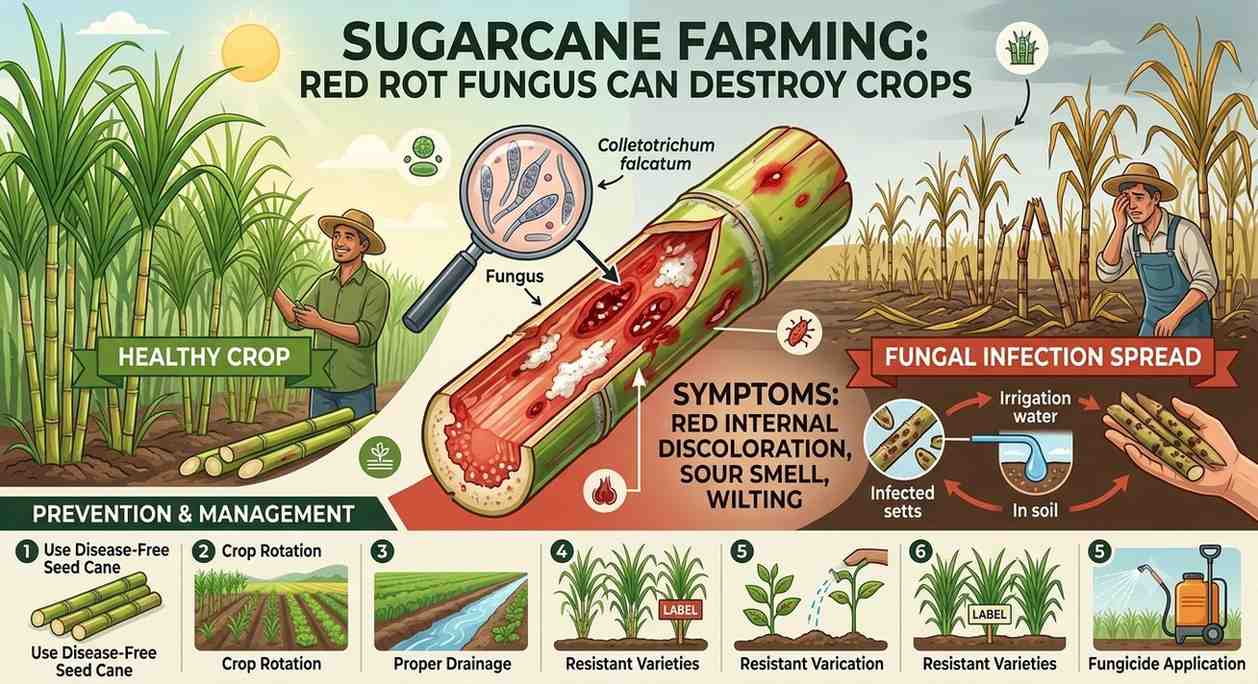
Sugarcane Farming: The arrival of the monsoon season brings much-needed rain for sugarcane cultivation, but it also increases the risk of deadly fungal diseases. Among them, Red Rot Disease, often called the “Cancer of Sugarcane,” is considered the most destructive. If left untreated, it can spread rapidly across an entire field, leading to severe crop losses.
Agricultural experts recommend that farmers adopt biological disease management practices using Trichoderma and Pseudomonas to reduce infection and improve soil health. Early identification and timely action are the keys to saving the crop.
🌧️ Why Does Red Rot Disease Increase During the Rainy Season?
During the monsoon, fields experience:
- 🌦️ High humidity
- 💧 Excess soil moisture
- 🚜 Waterlogging
- 🌡️ Temperature fluctuations
These conditions create an ideal environment for fungal pathogens to multiply quickly, making sugarcane highly vulnerable to infection.
Sugarcane-growing districts like Saharanpur face an even greater challenge because large areas remain under sugarcane cultivation throughout the year.
🚨 What is Red Rot Disease in Sugarcane?
Red Rot is a soil-borne fungal disease that attacks the stalks of sugarcane. It is regarded as one of the most dangerous diseases because it can survive in the soil for several years and spread from one plant to another.
If not controlled early, it can significantly reduce both yield and sugar recovery.
🔍 Symptoms of Red Rot Disease Farmers Should Never Ignore
Early detection can save an entire field.
Watch for these warning signs:
✅ Leaves begin drying from the top.
✅ The cane loses its healthy green colour.
✅ Internal tissues turn reddish with white patches.
✅ A foul smell develops inside infected stalks.
✅ The stalk becomes weak and eventually dries.
If several plants show these symptoms, immediate action is necessary.
👨🌾 Expert Advice: How to Protect Sugarcane from Red Rot
According to Dr. I.K. Kushwaha, Professor and In-charge of the Krishi Vigyan Kendra (KVK), Saharanpur, sugarcane is cultivated on more than one lakh hectares in the district.
He explains that because sugarcane is a long-duration crop, it remains exposed to changing weather conditions for several months. The combination of humidity and fluctuating temperatures during the rainy season encourages the rapid spread of fungal diseases, especially Red Rot.
🌿 Biological Control: Trichoderma and Pseudomonas Are Highly Effective
Experts recommend using beneficial microorganisms instead of relying only on chemical fungicides.
✅ Trichoderma
Trichoderma is a beneficial fungus that suppresses harmful fungi responsible for Red Rot.
Its benefits include:
- 🌱 Reduces fungal infection
- 🌾 Promotes healthy root development
- 🌍 Improves soil fertility
- 💪 Enhances plant resistance
✅ Pseudomonas
Pseudomonas is a beneficial bacterium that naturally protects plant roots against disease-causing pathogens.
It helps by:
- 🛡️ Controlling harmful fungi
- 🌿 Stimulating plant growth
- 🌾 Improving nutrient availability
- 🌍 Maintaining healthy soil microbes
💧 How to Apply Trichoderma and Pseudomonas
Agricultural experts recommend the following method:
- Mix Trichoderma or Pseudomonas with irrigation water or prepare a solution according to the recommended dosage.
- Add a small quantity of jaggery and gram flour (besan) to activate the beneficial microorganisms.
- Apply evenly around the root zone for better effectiveness.
These beneficial microbes multiply rapidly in moist soil and naturally suppress disease-causing fungi.
🚜 Remove Infected Plants Immediately
If any sugarcane plant shows signs of Red Rot:
❌ Remove the infected cane immediately.
🔥 Destroy it safely outside the field.
🚫 Never leave infected stalks in the field, as they can spread the disease to healthy plants.
Early removal is one of the most effective ways to stop the infection.
🌾 Additional Tips to Prevent Red Rot Disease
Follow these expert recommendations:
- ✅ Use disease-free seed cane.
- ✅ Ensure proper field drainage.
- ✅ Avoid waterlogging.
- ✅ Rotate crops whenever possible.
- ✅ Keep the field free from infected plant debris.
- ✅ Monitor fields regularly during the rainy season.
- ✅ Apply balanced fertilizers based on soil testing.
🌟 Why Early Prevention Matters
Once Red Rot spreads across the field, controlling it becomes extremely difficult. Timely monitoring and biological management not only reduce crop losses but also improve soil health for future crops.
Healthy fields produce:
- 🌾 Higher sugarcane yield
- 💰 Better profits
- 🍬 Improved sugar recovery
- 🌱 Stronger plants throughout the growing season
❓Frequently Asked Questions (FAQs)
What is Red Rot Disease in sugarcane?
Red Rot is a serious fungal disease that attacks sugarcane stalks and can destroy an entire crop if left unmanaged.
When does Red Rot spread the fastest?
It spreads rapidly during the monsoon season because high humidity and excess moisture favour fungal growth.
Can Trichoderma control Red Rot?
Yes. Trichoderma is a beneficial fungus that helps suppress disease-causing fungi and improves soil health when used correctly.
What should farmers do after spotting infected plants?
Remove and destroy infected plants immediately to prevent the disease from spreading to healthy sugarcane.
Is Red Rot a soil-borne disease?
Yes. The fungus can survive in the soil for several years, making preventive management essential.
🌱 Conclusion
Red Rot remains one of the biggest threats to sugarcane farming during the monsoon season. However, farmers can significantly reduce the risk by regularly monitoring their fields, ensuring proper drainage, removing infected plants promptly, and using biological agents such as Trichoderma and Pseudomonas. Taking preventive action at the right time can protect the crop, improve yields, and increase farm profits.